
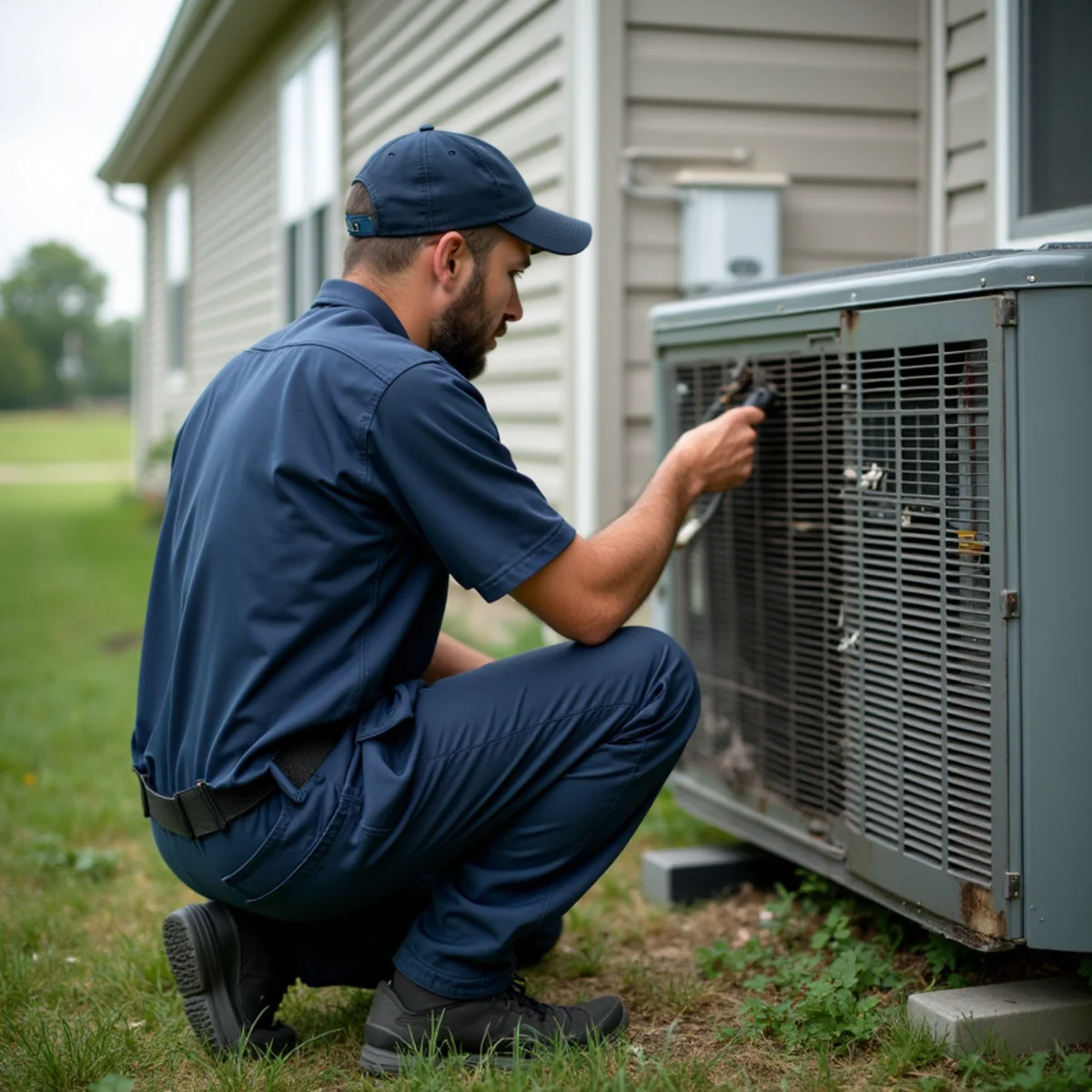
Southwest Missouri sits in tornado alley, and the same storms that damage roofs and siding wreck HVAC equipment — hail-battered condenser coils, lightning-fried control boards, flooded units, and debris-clogged systems. Hooten Heating & Cooling handles storm HVAC repair and recovery across Goodman, Joplin, and the surrounding region, and we document the damage properly for your insurance claim.
From a quick safety assessment after the storm to full replacement of a destroyed system, we help you get comfort back and give you the paperwork adjusters actually need.
Storm Damage We Repair
Hail-damaged condenser
Hail bends the outdoor coil fins and can restrict airflow and cooling; we assess and repair or straighten as needed.
Lightning and power-surge damage
Surges destroy control boards, capacitors, and compressors. We diagnose electrical damage and restore the system.
Flooded equipment
A submerged outdoor unit or a flooded furnace has safety and reliability issues that require professional evaluation before use.
Debris and impact damage
Wind-driven debris can dent housings, break line-sets, and clog units — we clear and repair the damage.
Complete system loss
When a unit is beyond repair, we handle documented replacement and coordinate with your insurance.
After the Storm: First Steps
Safety and documentation come first. Take these steps before you run a storm-damaged system.
Stay safe
- 1Don't power on a flooded or visibly damaged unit — have it inspected first.
- 2Keep clear of downed power lines and standing water near the equipment.
- 3If you smell gas or burning, stay out and call from a safe spot.
- 4If the system is running rough, shut it off at the thermostat and breaker.
A flooded unit can hide electrical and refrigerant hazards — inspection first.
Document for insurance
- 1Photograph the outdoor unit, hail or impact damage, water lines, and any wet indoor equipment.
- 2Note the date and time the storm hit.
- 3Find your policy and check your coverage and deductible.
- 4Call us for an itemized damage assessment for your claim.
We provide the itemized documentation and photos adjusters need.
Our Process
Every job follows a clear, honest process — so you always know what's happening and why.
- 1
Post-storm safety check
We assess for electrical, refrigerant, and structural safety before anything is powered back on.
- 2
Damage documentation
We photograph and document the damage in the detail insurance adjusters expect.
- 3
Repair-or-replace assessment
We determine what can be safely repaired and what needs replacement.
- 4
Written estimate for your claim
You get itemized written pricing that supports your insurance documentation.
- 5
Repair or replacement
We restore or replace the system and verify safe, correct operation.
Southwest Missouri sits in tornado alley, and the storms that tear up roofs also wreck HVAC systems — hail-flattened condenser fins, lightning-fried control boards, flooded outdoor units, and debris-clogged coils. We handle the repair and the paperwork, documenting damage the way adjusters expect.
After severe weather, don't power a storm-hit or flooded unit back on until it's inspected — there can be hidden electrical and refrigerant hazards. We assess safety first, then repair or coordinate a documented replacement.
What Affects the Price
Storm repair costs range from minor coil and electrical work to full replacement, and much of it may be covered by your homeowner's policy. We provide the itemized documentation adjusters need and work to make the claim process smoother.
Storm Repair
By damage
Fins to full loss
Standard Repair
$75–$3,500
Component range
Full Replacement
$2,100–$16,000
If beyond repair
Insurance Docs
Included
Itemized for your claim
Researched, aggregated ranges to help you plan — not a quote. Your written price depends on the specifics below.
- Extent of damage (coil, electrical, flooding, full loss)
- Repair vs. documented replacement
- Parts and refrigerant required
- Insurance documentation and coordination
- Emergency vs. scheduled timing
Repair, Replace, or File a Claim?
Storm damage ranges from a bent fin to a total loss — we help you sort it out honestly.
Repair
Straightened fins, a new control board, or a surge-damaged capacitor can restore an otherwise sound unit.
Replace
A flooded unit or one with heavy hail or impact damage is often a documented replacement.
Claim support
Much storm damage is covered — we document it thoroughly so your insurance claim goes smoothly.
Need Storm HVAC Now?
Call Hooten Heating & Cooling for fast, honest storm hvac repair across Goodman, McDonald County & Southwest Missouri.
Where We Provide Storm HVAC
Serving Goodman and communities across McDonald County and Southwest Missouri: