
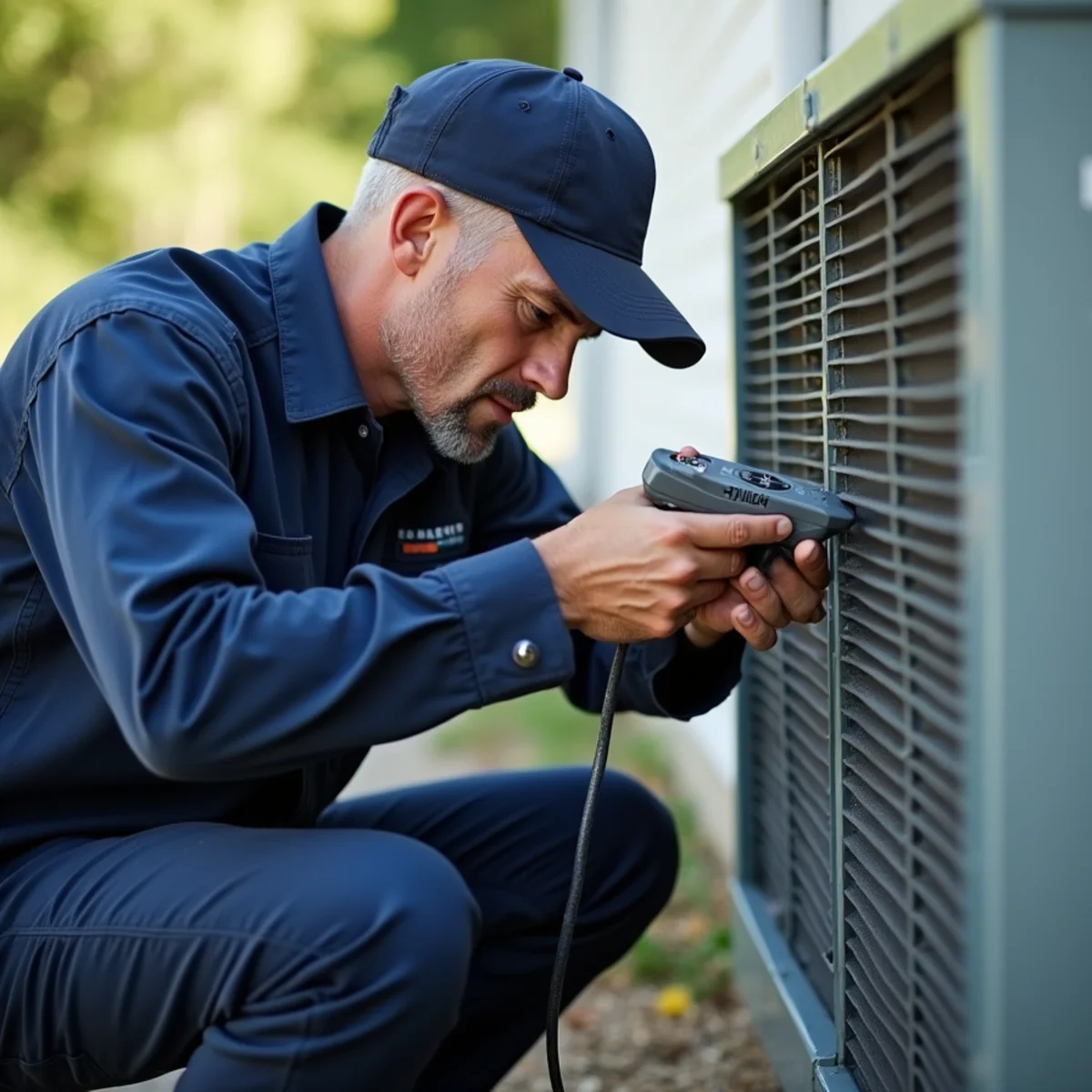
If your air conditioner cools less every summer, the answer usually isn't more refrigerant — it's finding the leak. Refrigerant is a sealed system; when it's low, it's escaping somewhere. Hooten Heating & Cooling uses proper leak-detection methods to locate and repair the source across McDonald County, so you're not paying to refill a system that keeps leaking.
Our EPA Section 608-certified technicians handle refrigerant responsibly and legally, and we explain honestly whether a leak repair or a system replacement is the better long-term value for your equipment.
Signs of a Refrigerant Leak
Gradually weaker cooling
The AC keeps running but cools less each season — a classic slow-leak symptom.
Ice on the coil or line
Low charge can freeze the evaporator coil or the copper line near the unit.
Hissing or bubbling sounds
Escaping refrigerant can make a faint hissing near the coil or lines.
Higher electric bills
A low-charge system runs longer to try to keep up, driving up energy costs.
Needing 'a recharge' every year
If a tech topped you off last summer and you're low again, you have a leak that needs to be found and fixed.
Think You Have a Refrigerant Leak?
A slow refrigerant leak shows up in small ways. Here's what to watch for — and what not to do.
Signs of a leak
- 1Cooling gets weaker every season even though the system runs.
- 2Ice forms on the coil or on the copper line near the outdoor unit.
- 3You hear a faint hissing or bubbling near the coil or lines.
- 4Electric bills climb as the system runs longer to keep up.
- 5You were 'topped off' last summer and you're already low again.
If a top-off didn't last a year, you have a leak that needs finding — not more refrigerant.
What not to do
- 1Don't keep paying for top-offs without locating the leak.
- 2Don't add refrigerant yourself — it's EPA-regulated and must be handled by a certified tech.
- 3Don't run a badly iced-over system; it can damage the compressor.
- 4Switch the system to 'fan only' to help it thaw, then call us.
Refrigerant must be recovered and recharged by an EPA Section 608-certified technician.
Our Process
Every job follows a clear, honest process — so you always know what's happening and why.
- 1
Confirm low charge
We measure the system to verify it's actually low on refrigerant rather than another cooling fault.
- 2
Locate the leak
We use electronic detectors, and where appropriate dye or pressure methods, to pinpoint the source.
- 3
Repair recommendation
We show you the leak location and lay out repair vs. replacement honestly, especially on older refrigerant systems.
- 4
Repair and recharge
We repair the leak, evacuate, and charge the system to the correct level per manufacturer specs.
- 5
Verify performance
We confirm proper pressures, temperature split, and no remaining leak.
A system that cools a little less every summer isn't 'low on Freon' by nature — refrigerant runs in a sealed loop, so if it's low, it's escaping somewhere. Chasing that with a yearly top-off is money down the drain, and on older R-22 systems it gets more expensive every season as supply tightens.
Our EPA Section 608-certified technicians recover and recharge refrigerant legally and to the manufacturer's spec, and we tell you honestly when a leaking coil on an aging unit makes replacement the smarter spend.
What Affects the Price
Cost depends on where the leak is and how accessible it is — a fitting is very different from a leaking evaporator coil. We give written pricing and, on older systems using phased-out refrigerant, we'll be candid about whether repair or replacement makes more financial sense.
Leak Repair
By location
Fitting vs. coil differs
AC Repair
$75–$2,800
Standard range
Hourly Labor
$55–$225
Avg. total $210–$650
New AC (if needed)
$2,100–$16,000
By capacity & scope
Researched, aggregated ranges to help you plan — not a quote. Your written price depends on the specifics below.
- Leak location and accessibility (fitting, coil, line-set)
- Refrigerant type and amount required
- Whether a coil or component must be replaced
- Age of the system and refrigerant availability
- EPA-compliant recovery and recharge labor
Repair the Leak or Replace the System?
Where the leak is — and how old the system is — drives the smart call. We show you both sides.
Repair
A leaking fitting or accessible line is a straightforward fix, followed by a spec-matched recharge.
Weigh it
A leaking evaporator coil on a mid-life system is a bigger repair worth comparing to replacement.
Replace
An old unit on phased-out R-22 with a coil leak often costs less to replace than to keep refilling.
Need Refrigerant Leaks Now?
Call Hooten Heating & Cooling for fast, honest refrigerant leak detection across Goodman, McDonald County & Southwest Missouri.
Where We Provide Refrigerant Leaks
Serving Goodman and communities across McDonald County and Southwest Missouri: