Why Your Heat Pump Freezes Up in Winter
Some frost on a winter heat pump is normal — a solid block of ice is not. Here's how to tell the difference and when to call for repair.
By Hooten Heating & Cooling · January 28, 2025 · 7 min read
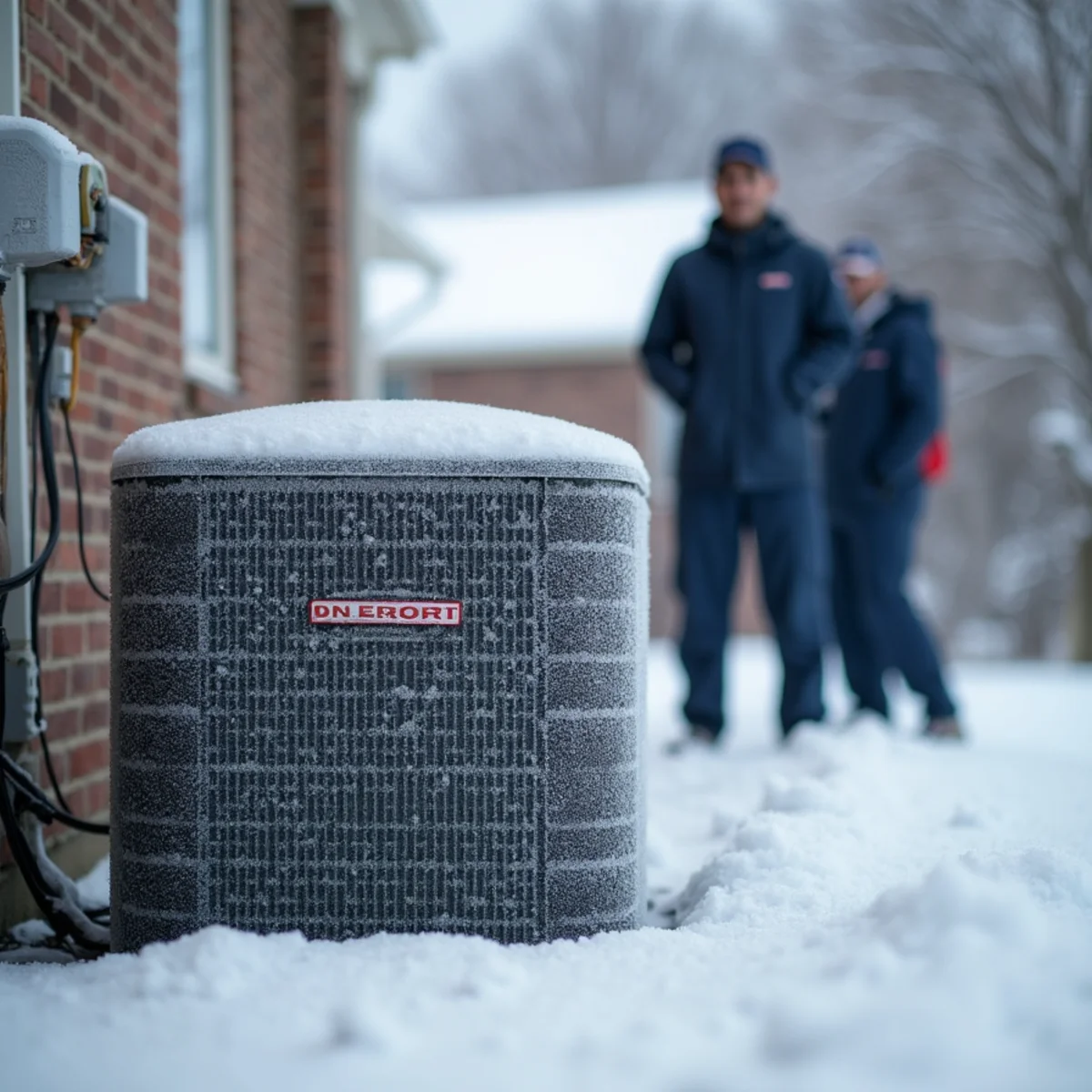
You walk out on a cold Cassville morning and find your heat pump's outdoor unit covered in frost or ice. Is that a problem? The answer is: sometimes. A heat pump is designed to frost up in cold, damp weather and then melt it off automatically. But there's a clear difference between normal frosting and a unit encased in ice that never clears. Knowing which you're looking at can save you from a damaged coil and a much bigger repair bill.
Why Heat Pumps Frost Up at All
In heating mode, a heat pump pulls warmth from the outdoor air, which makes the outdoor coil colder than the air around it. When it's cold and humid — think a damp Missouri morning in the 30s — moisture in the air condenses on that cold coil and freezes. This is completely normal. A light coating of frost on the coil during heating operation is the system doing exactly what it's designed to do.
The Defrost Cycle
To handle that frost, every heat pump has a defrost cycle. Periodically, the system briefly reverses to cooling mode, sending warm refrigerant through the outdoor coil to melt the frost while a temporary backup keeps your indoor air warm. You'll often see a burst of steam rising off the outdoor unit — that's the frost melting, not a malfunction. The cycle runs for a few minutes, clears the coil, and switches back to heating. If your defrost cycle is working, frost never gets the chance to build into ice.
When Freezing Is a Problem
Frost becomes a problem when it turns into thick, persistent ice that the defrost cycle can't clear. Watch for these warning signs:
- The entire unit, including the top and fan, is encased in ice rather than a light frost on the coil.
- Ice remains all day and keeps building rather than melting off periodically.
- The unit is blowing cool air indoors and struggling to reach the set temperature.
- Your backup or auxiliary heat runs constantly, driving up your electric bill.
- You hear unusual noises or the fan is straining against ice buildup.
What Causes a Heat Pump to Ice Over
Persistent icing usually traces back to one of a handful of causes, and most need a technician to diagnose properly.
- A failed defrost control board or defrost sensor, so the cycle never triggers.
- A stuck reversing valve that can't switch the system into defrost.
- Low refrigerant charge, which lowers coil temperature and worsens frosting — and points to a leak.
- Restricted airflow from a dirty coil, clogged filter, or a failing fan motor.
- Poor drainage or a low unit, where snowmelt or roof runoff pools and refreezes around the base.
What Not to Do
Never chip, scrape, or hammer at the ice — the coil and its fins are thin and easily punctured, and a nicked refrigerant line turns a repairable problem into a major one. Don't pour hot water over the unit in freezing weather either, since it can refreeze and make things worse. If the unit is iced solid, the safest first step is to switch the thermostat to emergency heat, which runs your backup and stops the heat pump from making more ice, then call for service.
A little frost is the system working. A block of ice is the system asking for help — and the sooner you call, the more likely it's a sensor or charge fix rather than a damaged coil.
Placement and Prevention Help
Some icing problems trace back to where and how the unit sits. A heat pump mounted too low to the ground, or placed under a roofline with no gutter, can sit in snowmelt and roof runoff that pools and refreezes around the base until the coil is buried in ice. Manufacturers call for the unit to be elevated on a stand or bracket in snow country for exactly this reason, so meltwater and defrost condensate can drain away instead of building up. Keeping the area around the unit clear of leaves, tall grass, and drifting snow helps too, since anything that blocks airflow across the coil makes frosting worse and the defrost cycle less effective. If your unit ices repeatedly every winter and it sits low or in a drainage path, ask about raising it — it's often a simple, permanent fix for a recurring headache.
Don't Let a Frozen Coil Turn Into a Big Repair
If your heat pump is icing over and staying that way, catching it early usually means a straightforward repair — a defrost sensor, a control board, or a refrigerant charge — rather than a damaged coil. Hooten Heating & Cooling services heat pumps across Cassville, Neosho, and the surrounding area, and we know how to keep them running through a Missouri winter. Call (831) 461-3437 and we'll get your system defrosting the way it should.
Related Services
Areas We Serve
Frequently Asked Questions
- Yes. A light coating of frost on the outdoor coil during heating is normal, and the defrost cycle melts it off periodically — often producing a visible burst of steam. It only becomes a concern when the unit is encased in solid ice that doesn't clear.